Past Events
Getting Down to Facts III Webinar Series
Join Getting Down to Facts III researchers for a closer look at the evidence from this landmark independent study of California’s education system. Drawing on 55 technical reports and 22 research briefs from researchers across the country, each webinar will examine a critical area of California education highlighting what the research tells us, where challenges and opportunities remain, and what the findings mean for policy and practice.
Getting Down to Facts III Bay Area Convening
We are pleased to invite you to the Getting Down to Facts III Bay Area Regional Convening, a gathering of education leaders committed to strengthening educational opportunities and outcomes for California's students.
Hosted by Stanford University's SCALE Initiative, EdTrust-West, and Policy Analysis for California Education (PACE), this convening will bring together educators, policymakers, researchers, advocates, and community leaders from across the Bay Area to explore what the latest findings from Getting Down to Facts III mean for our schools, communities, and the future of public education.
The Education Data Science Conference 2026
The Education Data Science Conference 2026, held at the Graduate School of Education at Stanford University, is a three-day forum for researchers, practitioners, and students to shape the future of education through data. We invite submissions that advance rigorous, ethical, and interdisciplinary approaches through using data in a variety of learning contexts. From classrooms to platforms, from theory to practice: Please join us to share new applications of methods, address challenges of teaching, learning, and policy, and push the boundaries of an evolving discipline in pursuit of better, more equitable educational outcomes.
Education, Research, and Artificial Intelligence: Reflections from the AEFP Community
The session will invite panelists to share how they see AI shaping research, education, and the work that we do. We are especially interested in perspectives on questions such as: How might AI change the kinds of research we conduct, how we conduct it, and how we train the next generation of scholars? What implications might these technologies have for teaching, mentoring, and the preparation of students in education policy and related fields? And more broadly, how might AI shape education systems and the policy questions our field engages with?
Zoom Webinar
AI in Education Worldwide: What the Research Shows and What It Means Across Systems
To share insights from The Evidence Base on AI in K–12 report and explore what emerging research reveals about how AI tools are shaping teaching and learning globally. We plan to:
- Clarify what rigorous research currently shows about how AI tools affect student learning and instructional practice across contexts
- Highlight the global nature of the evidence base—and the limitations in applying findings across different education systems
- Explore how education leaders, researchers, and edtech developers can interpret and apply evidence in diverse international settings
Getting Down to Facts 2026 Conference: Aligning Governance, Policy, and Capacity to Support Student Success
Co-hosted by Policy Analysis for California Education (PACE) and Stanford University’s SCALE Initiative, the Getting Down to Facts in 2026: Aligning Governance, Policy, and Capacity to Support Student Success Conference will bring together 250 state leaders, educators, researchers, and advocates to engage with new, policy-relevant research at a pivotal moment for California’s education system. What to Expect:
- Equitable access to learning opportunities
- System alignment and accountability
- Capacity building
- Resources and conditions that support student success
Getting Down to Facts III Release Webinar
Join Susanna Loeb, Professor and Faculty Director of the SCALE Initiative at Stanford University, and a team of leading researchers for the official release of Getting Down to Facts III—a landmark, independent study on California’s education system. This webinar will unpack important findings from the research, highlight the challenges facing students and schools today, and outline a forward-looking vision for building a more effective and equitable system for the future.
From Hype to Evidence: The Data on AI and Learning
While many have opinions on AI, this group arrives with insights grounded in data. Education leaders and researchers from ASU, Stanford University and University of North Carolina System will explore the intersection of AI and learner agency through stories grounded in early research and data-driven investigations. By highlighting real-world examples and research findings, the session will invite reflection on both the promises and challenges of AI in fostering more empowered, self-directed, and meaningful learning pathways.Can Tutoring Save Us? AI, Accountability, and the Learning We Owe Students
Tutoring has long been one of education’s most powerful and most elusive levers for improving student outcomes. Decades of research show that high-quality tutoring can dramatically accelerate learning. And yet, at scale, that promise has repeatedly fallen short. Systems haven’t sustained it. Students haven’t seen the gains we hoped for. And too often, tutoring has remained fragile, episodic, or disconnected from core instruction.Now AI has entered the equation...not as a silver bullet, but as a forcing function. AI can diagnose faster, personalize more precisely, and deliver feedback at scale. But it also makes one reality impossible to ignore: technology can’t fix weak instructional design or unclear accountability. In an AI-enabled world, the question isn’t whether tutoring can work — it’s whether we are finally willing to build it in ways that actually deliver learning.In this session we'll explore whether AI can meaningfully strengthen tutoring, or does it simply expose what was never built to last? What conditions make tutoring durable? And what does accountability look like when the goal isn’t participation…but real gains for students?AEFP 2026 Annual Conference
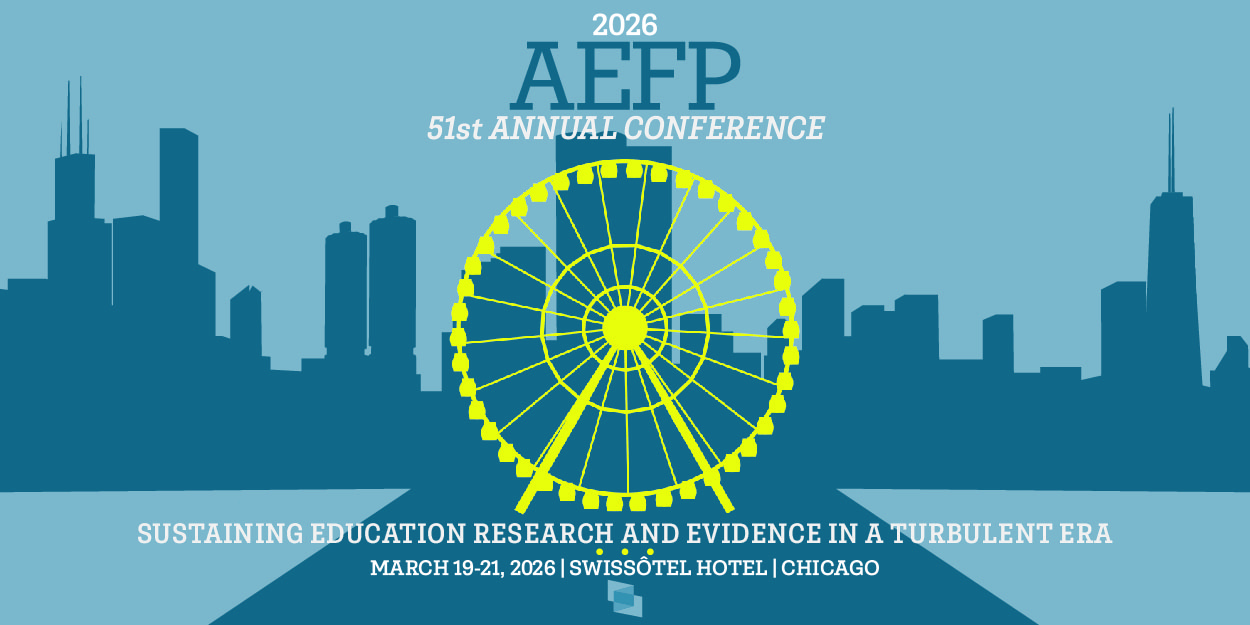
Come and see us at The AEFP 2026 Annual Conference on March 19-21, 2026 in Swissotel Chicago, Illinois