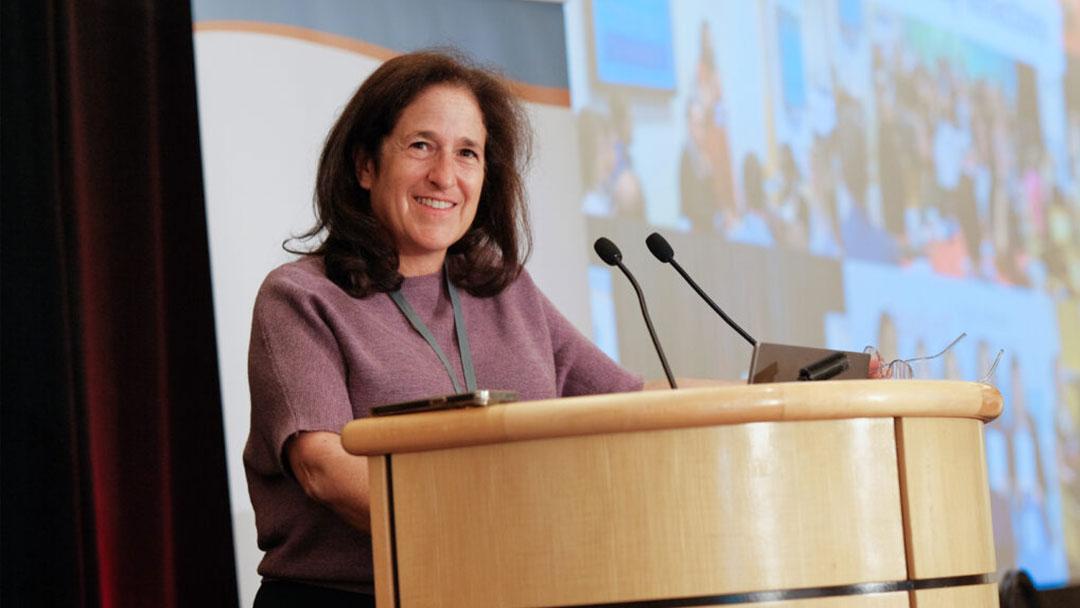
A decade ago, Professor Susanna Loeb and her research team launched a text messaging program in San Francisco to support early literacy in preschoolers. Tips by Text, which was inspired by a school district collaborator, sent parents timely, evidence-backed advice to build language and reading skills in their children. Studies of the program showed strong learning gains for the children and more parent engagement at home as a result.
Since then, Loeb has built on those promising findings, and expanded the program to serve families of students from various age groups and in districts across the U.S. as well as China, the UK, Denmark, and Singapore.
By all accounts, Tips by Text’s widespread use is a big win for a research-based solution. More often, scholarship-driven tools don’t get beyond the initial classroom in which they were tested, no matter how promising the findings or well-intentioned the scholar and school.
Bringing an effective model from one student to a classroom, district and beyond means many, many more students can reap the benefits of high quality instruction and education innovation including improved academic achievement, enhanced well-being, and stronger, more meaningful engagement in learning. These positive student outcomes spill over into families and communities, creating healthier and more sustainable societies.