The causal evidence on generative artificial intelligence (AI) in education has grown substantially since our March 2026 Evidence Base Review. This update examines new randomized controlled trials and quasi-experimental designs in the AI Hub for Education’s Research Repository that were published between October 2025 and June 2026. It assesses whether the new evidence supports, challenges, or extends the findings we published in March.
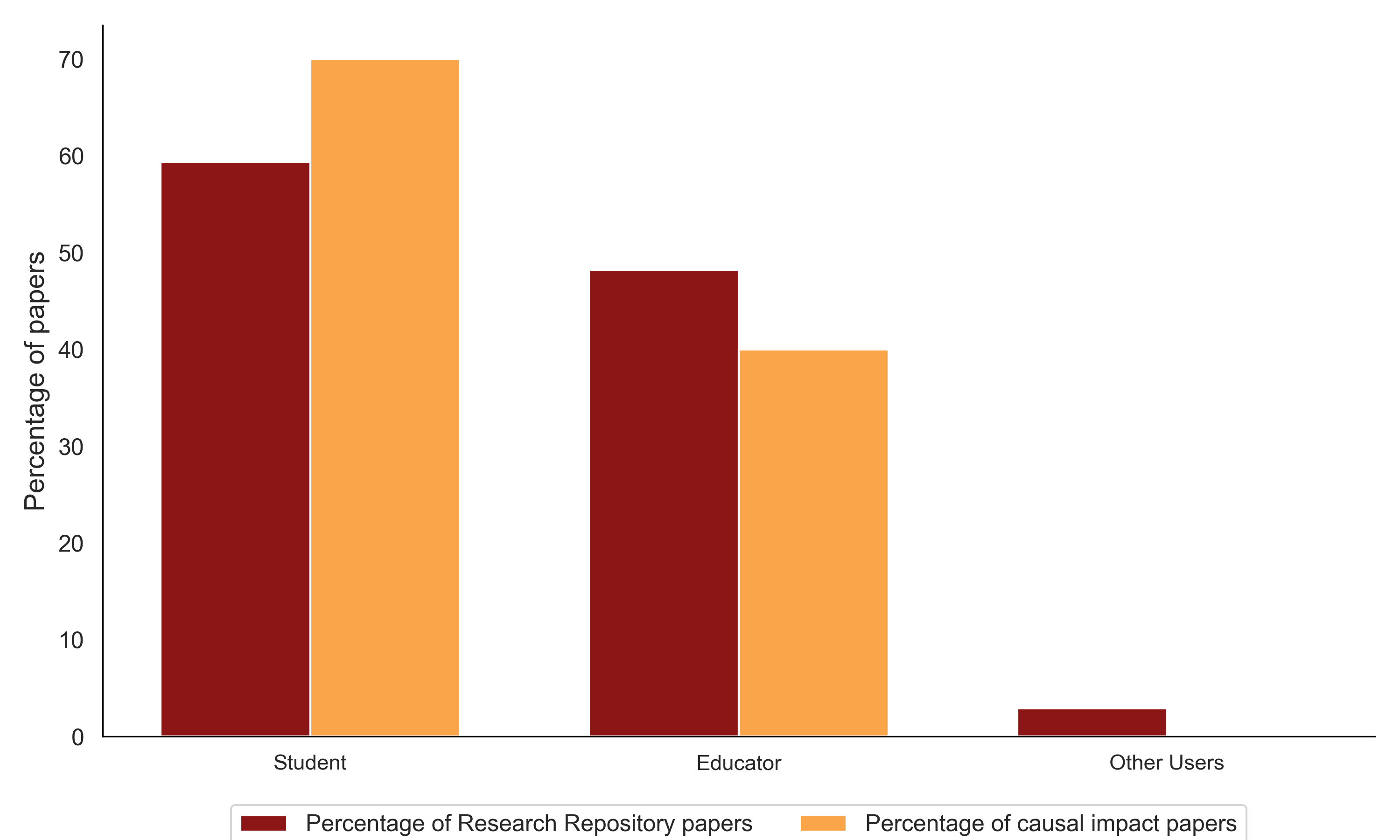
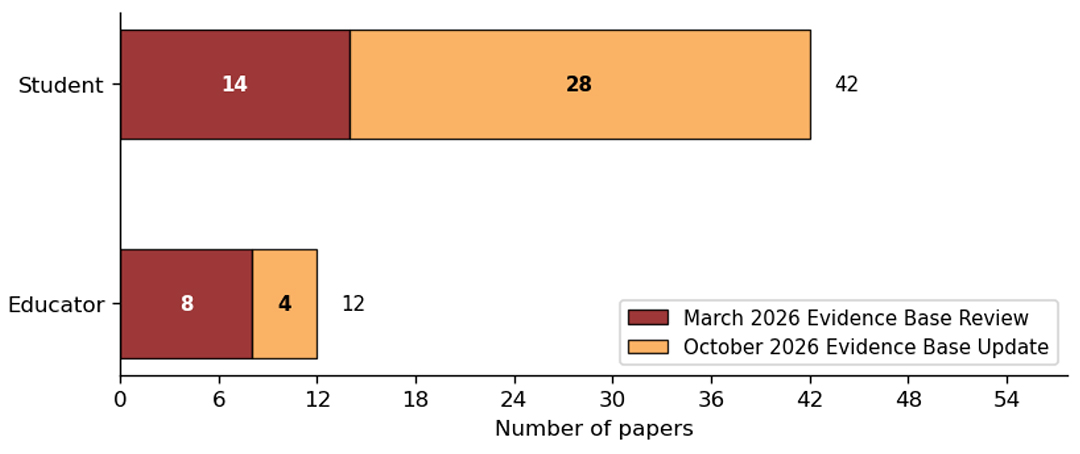
The causal evidence base on AI in education has grown substantially, from 20 papers in the March 2026 Evidence Base Review to 52 papers in this update (an increase of 32 papers). The evidence base has expanded most rapidly for student-facing AI (relative to educator-facing AI), and U.S.-based research has also increased. Five of the new student-facing studies were conducted in U.S. K–12 settings, compared with none in the March 2026 Evidence Base Review. The findings can provide guidance for education leaders, but should not be treated as broadly generalizable across U.S. K–12 settings.